
UK study visa applications rose 7% in the year ending September 2025, when the Home Office granted 419,558 sponsored study visas to main applicants, according to official Home Office immigration statistics. That rebound did not last. By the year ending August 2026, main applicant numbers had fallen 16%, and for students from Pakistan, refusal rates have climbed sharply. If you are planning a UK degree, the 7% headline is only half the story.
This guide breaks down what the numbers actually say, which rule changes sit behind them, and what they mean for your plans if you are a student in Pakistan or South Asia weighing a UK computing degree in 2026 or 2027. It also covers a route many students overlook: earning a UK-awarded degree at home first, then deciding whether and when to travel. For the wider picture on how the UK compares with other study destinations, see our analysis of why the UK is winning international students as Canada tightens caps.
What Does the 7% Rise in UK Study Visas Actually Mean?
The 7% rise means the UK granted more study visas to main applicants in the year ending September 2025 than in the year before, while dependant visas collapsed. It was a recovery in student numbers, not a return to the peak. The total of 439,924 study visas (students plus dependants) was still well below the 652,072 granted at the 2023 peak.
| Measure (year ending September 2025) | Figure | Change vs previous year |
|---|---|---|
| Study visas granted to main applicants | 419,558 | Up 7% |
| Study visas granted to dependants | 20,366 | Down 57% |
| Total sponsored study visas | 439,924 | Below the 2023 peak of 652,072 |
| Extensions onto the Graduate route | Over 237,000 | Up 10% |
One detail matters for anyone reading the headline: the 7% figure counts visas granted, not applications submitted. Grants lag behind applications by weeks or months, so a rise in grants can sit alongside a fall in new applications. That is exactly what happened next.
Why Did Dependant Visa Numbers Plummet?
Dependant visa numbers plummeted because rules in force since 1 January 2024 stop most international students from bringing family members to the UK. Only students on postgraduate research programmes, such as PhDs and research master's degrees, can still sponsor dependants. Taught master's and undergraduate students cannot.
- Dependant grants fell 57% in the year ending September 2025, to 20,366.
- Dependant applications are 88% lower than in the year ending December 2023, the last full year before the ban, according to the Home Office's monthly entry clearance visa applications release for August 2026.
- Dependant applications kept falling in 2026, down another 22% to 17,000 in the year ending August 2026.
For a married student or a parent, this is the single biggest practical change. If you planned to study a taught UK degree with your spouse or children joining you, that plan no longer works under current rules.

What Do the Latest 2026 UK Study Visa Figures Show?
The latest 2026 figures show UK study visa demand falling again after the 2025 rebound. Main applicant applications dropped 16% to 360,700 in the year ending August 2026, and grants to main applicants fell 12% to 365,868 in the year ending June 2026.
| Period | Main applicants | Change | Source |
|---|---|---|---|
| Year ending September 2025 (grants) | 419,558 | Up 7% | Home Office quarterly statistics |
| Year ending June 2026 (grants) | 365,868 | Down 12% | Home Office quarterly statistics |
| Year ending August 2026 (applications) | 360,700 | Down 16% | Home Office monthly monitoring |
The Home Office's year ending June 2026 study release adds more context. Total study visas (students plus dependants) reached 383,455, which is 41% below the 2023 peak. Master's students still make up the largest group, at 62% of study visas. Graduate route grants dropped 39% to 157,356.
How Have the Top Source Countries Changed?
The mix of countries sending students to the UK shifted fast between 2025 and 2026. China has overtaken India at the top, and Pakistan has seen the steepest fall of any major market.
| Nationality | YE Sept 2025 grants | YE June 2026 grants | What changed |
|---|---|---|---|
| India | 99,128 | 82,523 | Down 16% year on year |
| China | 89,397 | 86,368 | Now the largest source country |
| Nigeria | 30,009 | 26,060 | Grew 56% in 2025, then slowed |
| Pakistan | 36,924 | Not in top three | Down 47% year on year |
| Nepal | 20,572 | Not in top three | Grew 89% in 2025 |
What Does This Mean for Students from Pakistan?
For students from Pakistan, the 2026 picture is much harder than the 7% headline suggests. Pakistani study visa grants fell 47% in the year ending June 2026, and refusal rates have risen to levels that are pushing some UK universities to pause recruitment from the country altogether.
- Refusal rates jumped. An ICEF Monitor analysis of Home Office data puts the refusal rate for Pakistani students at 41% in Q4 2025 to Q1 2026, up from roughly 6% a year earlier. Bangladesh sat at 26% and Nigeria at 20%, while students from China were approved more than 99% of the time.
- Universities are screening harder. From 1 June 2026, UK universities must keep their visa refusal rate under 5% to keep a clean compliance record, down from 10%, according to UKCISA's summary of the new Basic Compliance Assessment. A university with high refusals from one country has a direct reason to recruit fewer students from it.
- Withdrawals rose. ICEF reports that many South Asian applicants withdrew applications after long processing delays, rather than risk a refusal on their immigration record.
None of this means a Pakistani student cannot get a UK study visa. It means the margin for error is smaller. A weak funds history, a gap in your documents, or an unconvincing answer at a credibility interview now carries more risk than it did two years ago.

Which UK Visa Rule Changes Are Coming Next?
Three more changes will shape UK study plans through 2028: a shorter Graduate route, tougher university compliance rules, and a proposed levy on international student fees in England. Each one affects how much a UK degree costs you and what you can do after graduating.
| Change | Date | What it means for you |
|---|---|---|
| Dependants ban for taught courses | 1 January 2024 (in force) | Undergraduate and taught master's students cannot bring family. |
| Higher maintenance funds | In force | You must show £1,529 a month in London or £1,171 outside London. |
| Tighter Basic Compliance Assessment | 1 June 2026 (in force) | Universities screen applicants harder before issuing a CAS. |
| Graduate route cut to 18 months | Applications from 1 January 2027 | Less time to find a graduate job after a bachelor's or master's. PhD graduates keep 3 years. |
| International student levy | Proposed from August 2028 | £925 per student per year at English universities, pending legislation. Costs may pass to students. |
Dates for the Graduate route, levy, and compliance changes follow the House of Commons Library briefing CBP-10267 on changes after the 2025 immigration white paper, last updated in September 2026. The shorter Graduate route matters most for students who planned to use two years of UK work experience to pay back the cost of their degree. Eighteen months is a much tighter window.
How Much Does a Year of UK Study Cost on a Student Visa?
One year of undergraduate computing study in London costs roughly £33,000 once tuition, living funds, the visa fee, and the health surcharge are added together. That figure is before flights, deposits, or currency swings.
| Cost item (one year, London) | Amount | Basis |
|---|---|---|
| Tuition, BSc Computing at the University of Greenwich (international) | £17,975 | 2026/27 published fee |
| Maintenance funds you must show | £13,761 | £1,529 x 9 months |
| Immigration Health Surcharge | £776 | Student rate, per year |
| Student visa application fee | £558 | Applying from outside the UK |
| Total for one year | £33,070 | Before travel and other costs |
Tuition comes from the University of Greenwich BSc Computing course page. The maintenance figure comes from GOV.UK's Student visa funds guidance, which also requires the money to sit in your account for at least 28 consecutive days, ending within 31 days of your application. The visa fee and health surcharge are the current GOV.UK rates. Outside London, the maintenance requirement drops to £10,539 for nine months.
Multiply that across a three-year degree and the total passes £95,000. For most families in Pakistan, that is the real decision behind the headline, not whether visa numbers are up or down by a few percent.

What Are Your Options If You Still Want a UK Degree?
If you still want a UK degree, you have three realistic options: apply directly to a UK university now, study a UK-awarded degree in Pakistan first, or combine the two by studying at home and travelling later for postgraduate study. Each route trades cost against time spent in the UK.
| Route | Visa needed | Rough cost | Best for |
|---|---|---|---|
| Full UK degree abroad (3 years) | Student visa for the full degree | £95,000+ in London | Students with strong funds and a clean application history |
| UK-awarded degree studied in Pakistan | None | Local fees in PKR | Students who want a UK degree without visa risk or UK living costs |
| UK degree at home, then UK master's | Student visa for 1 year only | Local fees, then one UK year | Students who want UK experience and a Graduate route option later |
The third route has a quiet advantage under the 2026 rules. A student who already holds a UK bachelor's degree, with UK-standard transcripts and English skills built over several years, is usually a stronger visa applicant for a one-year master's than a school leaver applying for the first time.
How Can You Strengthen a UK Student Visa Application in 2026?
You can strengthen a UK student visa application by getting the basics exactly right: funds, English, documents, and a clear reason for your course choice. With universities now judged on a 5% refusal limit, these are the checks that decide whether you receive a CAS at all.
- Hold the full funds for 28 days in a row. Show tuition owed plus £1,529 or £1,171 a month for up to nine months, in an account the Home Office accepts.
- Prove your English early. Book an approved test well before the CAS deadline, or confirm your university's own assessment is accepted.
- Explain your course choice. Be ready to say why this course, this university, and how it fits your career plan. Vague answers are a common reason for refusal after a credibility interview.
- Match every document. Names, dates, and grades must line up across your transcripts, passport, bank statements, and CAS.
- Apply early. Apply up to six months before your course starts from outside the UK. Standard decisions take around three weeks.
- Keep a clean record. A past refusal must be declared, and it stays on your record for future UK applications.
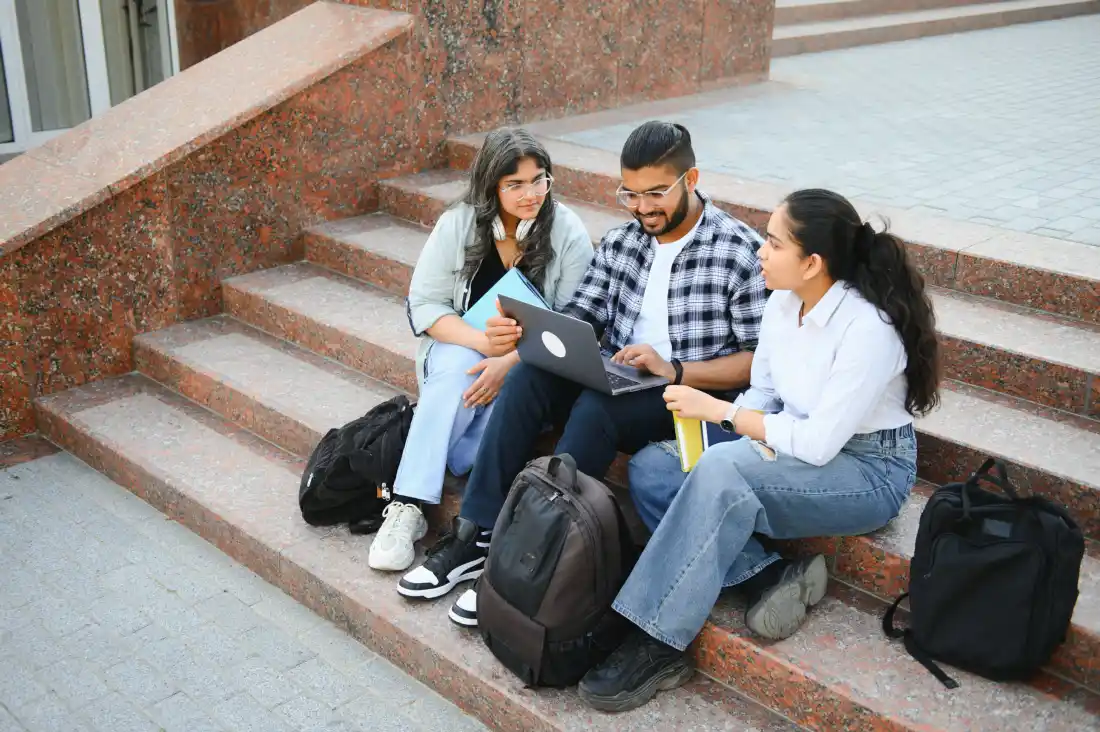
How Academic Training Hub Helps Students Earn a UK Degree Without Leaving Pakistan
The following section describes Academic Training Hub's (ATH) own programme structure. It is not a third-party finding. Academic Training Hub delivers a four-stage UK computing pathway at its Islamabad campus, from the International Foundation Year to a University of Greenwich honours degree. Students complete every stage in Pakistan, so no UK student visa is needed to earn the degree.
| Stage | Qualification | Awarded by | Duration |
|---|---|---|---|
| Level 3 | International Foundation Year | NCC Education (Ofqual regulated) | 1 year |
| Level 4 | NCC Education Level 4 Diploma in Computing | NCC Education (Ofqual regulated) | 1 year |
| Level 5 | NCC Education Level 5 Diploma in Computing (Cyber Security) | NCC Education (Ofqual regulated) | 1 year |
| Level 6 | BSc (Hons) Computing top-up | University of Greenwich | 1 year full time |
The Level 4 Diploma is equivalent to the first year of a UK computing degree, and the Level 6 top-up is the final 120 credits of a University of Greenwich honours degree. Greenwich was rated Gold in the UK's 2023 Teaching Excellence Framework. Graduates can then apply for postgraduate study, including master's programmes at Greenwich, as a UK degree holder rather than a first-time applicant. Our guide to the BSc (Hons) Computing top-up as the fastest route to a UK degree explains the final year in detail.
At ATH, we see the pathway as a way to separate two decisions students are often forced to make at once: getting a UK degree, and moving to the UK. The International Foundation Year totals PKR 761,000 for 2026/27, including the NCC Education international fee. The full breakdown for each stage is on ATH's fee structure page, and the complete route is set out on the UK degree programme overview.
Common Mistakes Students Make When Reading Visa Headlines
- Treating one statistic as a trend. The 7% rise covered one year. The next release showed a 12% fall in grants and a 16% fall in applications.
- Confusing grants with applications. Grants show past decisions. Applications show current demand. They often move in different directions.
- Ignoring nationality data. A national average hides a 41% refusal rate for one country and a 99% approval rate for another.
- Planning around the old Graduate route. From January 2027, bachelor's and master's graduates get 18 months, not two years.
- Counting on bringing family. Taught-course students have not been able to bring dependants since January 2024.
Conclusion: What the 7% Rise Means for You
UK study visa applications rose 7% in the year ending September 2025, but the 2026 data shows applications down 16%, grants down 12%, and Pakistani grants down 47%. With a 5% refusal limit on universities, a shorter Graduate route from 2027, and a proposed levy from 2028, the UK remains open to international students, but it is choosier and more expensive than it was.
If a UK degree is your goal, the decision now comes down to risk and cost. Build your application carefully if you apply directly, or look at a UK-awarded pathway you can complete in Pakistan and keep the UK visa for a later, stronger application.
Frequently Asked Questions
Common questions about the rise in UK study visa applications and what it means for students
Yes, but for one period only. The Home Office granted 419,558 study visas to main applicants in the year ending September 2025, 7% more than the year before. The 2026 data shows a reversal, with applications down 16% in the year ending August 2026.
Down. Main applicant applications fell 16% to 360,700 in the year ending August 2026, and grants fell 12% in the year ending June 2026, according to Home Office statistics.
Since 1 January 2024, most international students on taught courses cannot bring dependants. Only postgraduate research students, such as PhD candidates, still can. Dependant applications are now 88% lower than in 2023.
Yes. Pakistani study visa grants fell 47% in the year ending June 2026, and an ICEF Monitor analysis of Home Office data puts the Pakistani refusal rate at 41% for Q4 2025 to Q1 2026. Some universities have paused recruitment from Pakistan as a result.
You must show your unpaid tuition plus £1,529 a month in London or £1,171 a month elsewhere, for up to nine months. The funds must be held for 28 consecutive days.
For applications made from 1 January 2027, bachelor's and master's graduates get 18 months instead of two years. PhD graduates keep three years.
From 1 June 2026, UK universities must keep student visa refusals below 5% (down from 10%), with at least 95% enrolment and 90% course completion, to pass the Home Office Basic Compliance Assessment. This makes universities screen applicants more carefully.
Yes. Transnational pathways let you study for a UK-awarded degree in your home country. At Academic Training Hub, students in Pakistan can progress from the International Foundation Year to a University of Greenwich BSc (Hons) Computing top-up without a visa.